Patternmaking for Fashion Design (5th Edition)
Helen Joseph Armstrong
A must for aspiring pattern designers.
Seam Logic is designed as a structured, studio-based guide for developing patternmaking skills through progressive practice. Note that it is not a comprehensive course on its own. The manual draws primarily from the textbook Patternmaking for Fashion Design (5th Edition) by Helen Joseph Armstrong, with additional readings and exercises from the other reference texts listed throughout the modules. In some cases, instructional resources are provided from helpful videos or websites; however, I have tried to limit these, as websites tend to change and links go out of date.
The manual is split into “modules” and “skills inserts” that are meant to iteratively build your skills, starting from the process of drafting a basic block. Although it is an important skill, draping isn’t covered here (sorry!). Most modules follow a similar structure: readings, paper-based drafting exercises, muslin-based explorations, and opportunities for reflection and further research. Many pattern manipulations are first explored at half scale, which will allow you the freedom to experiment and understand how the shape of a pattern changes before committing to a full-scale draft. Half-scale or full-scale muslins then translate those drafts into three-dimensional garments so you can see how shaping, proportion, and fabric characteristics come together.
Throughout the manual, Fit and Style Reflections encourage you to consider how a pattern draft or muslin hangs, moves, and distributes volume or shaping on your body or dress form. These reflections will fine-tune your ability to diagnose fit and interpret how the pattern is constructed and executed, which is an essential part of the patternmaking process. Most modules also include Study Projects and conclude with one or more Final Projects. Study projects are designed to serve as wearable exercises that isolate a specific patternmaking concept, while the final project(s) integrate multiple techniques from the module into a more technically complex garment.
Over time, the work produced through this manual should result in a set of personalized blocks, technical studies, and wearable garments that demonstrate a multitude of patternmaking techniques. Because this manual is self-guided, you’re welcome to work through it as quickly or as slowly as you desire, or to skip sections in which you already feel confident.
If you’re on Instagram, feel free to follow @seamlogic and tag me when you share your patternmaking process and finished garments!
Books and references to support your journey.
Grow your patternmaking and sewing library
Helen Joseph Armstrong
A must for aspiring pattern designers.Winifred Aldrich
Jo Barnfield and Andrew Richards
Alison Smith
Alison Smith
Claire Shaeffer
Connie Amaden-Crawford
About the author
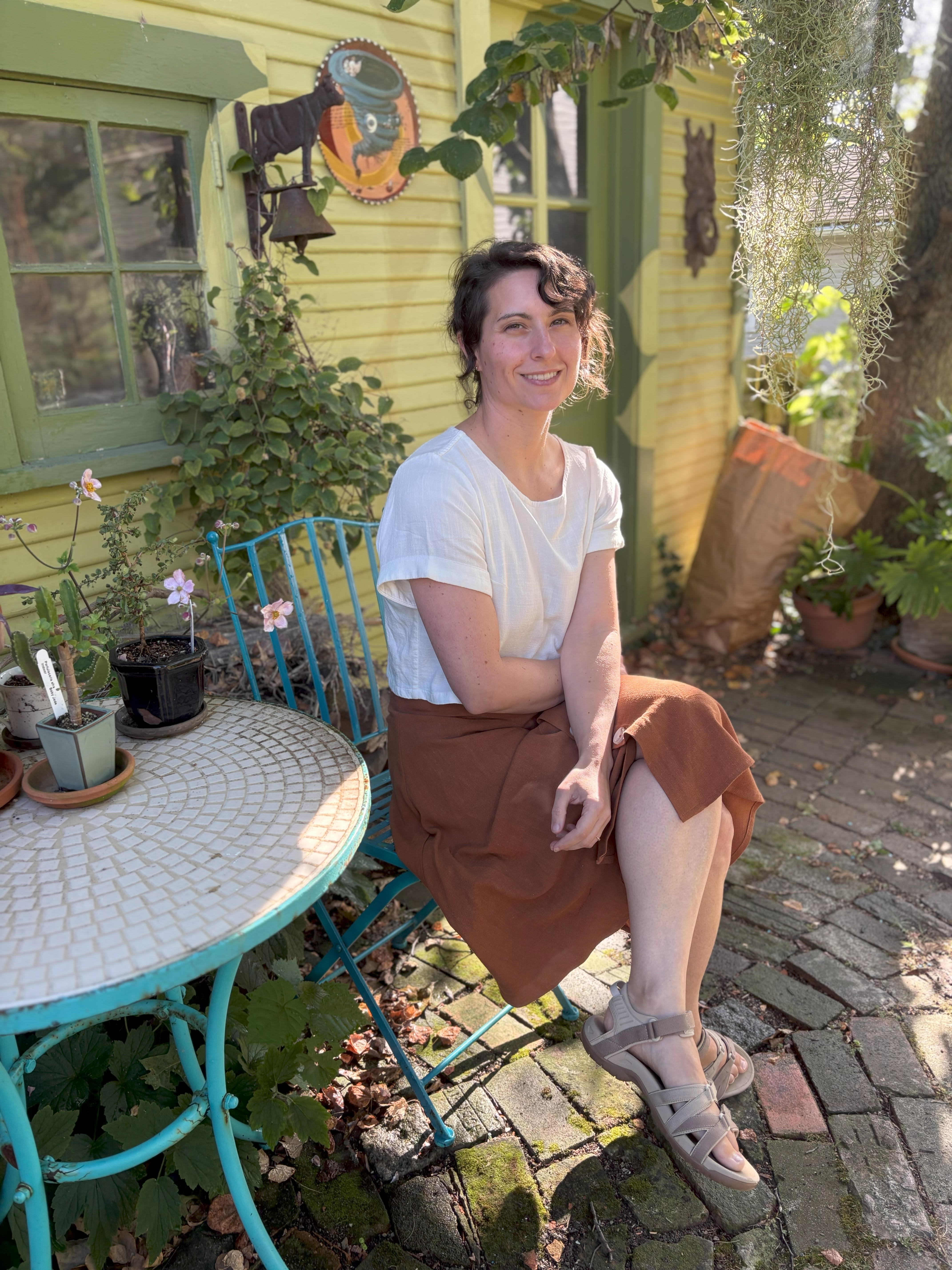
I’m a research ecologist, a university professor, and a mom to two boys (phew!). I started sewing in summer 2025 to cope with the every day stresses of my job and the endless anxieties of motherhood. My mom was a textile artist when I was growing up, and the sewing machine was always out on the table; however, I largely abandoned my childhood dreams of becoming a fashion designer in high school. As an adult, rediscovering my passion for making clothes has felt like coming up for air.
The scientist and statistician in me has always been fascinated by the engineering problem of fitting a two-dimensional pattern to a three-dimensional body, so learning to draft my own patterns feels like the logical next step. I originally created Seam Logic as a guide for my personal patternmaking journey, but about half way through writing it and organizing the materials, I realized others might benefit from its structured, self-guided approach. This is why I’m sharing it here, along my trials and tribulations as I work through all the exercises and projects.
The sewing community has been a great source of joy over the past few years and I’m happy to contribute, respond, and interact as best I can.
@this_idiot_sewist