August 16, 2026
Dart Manipulation Theory
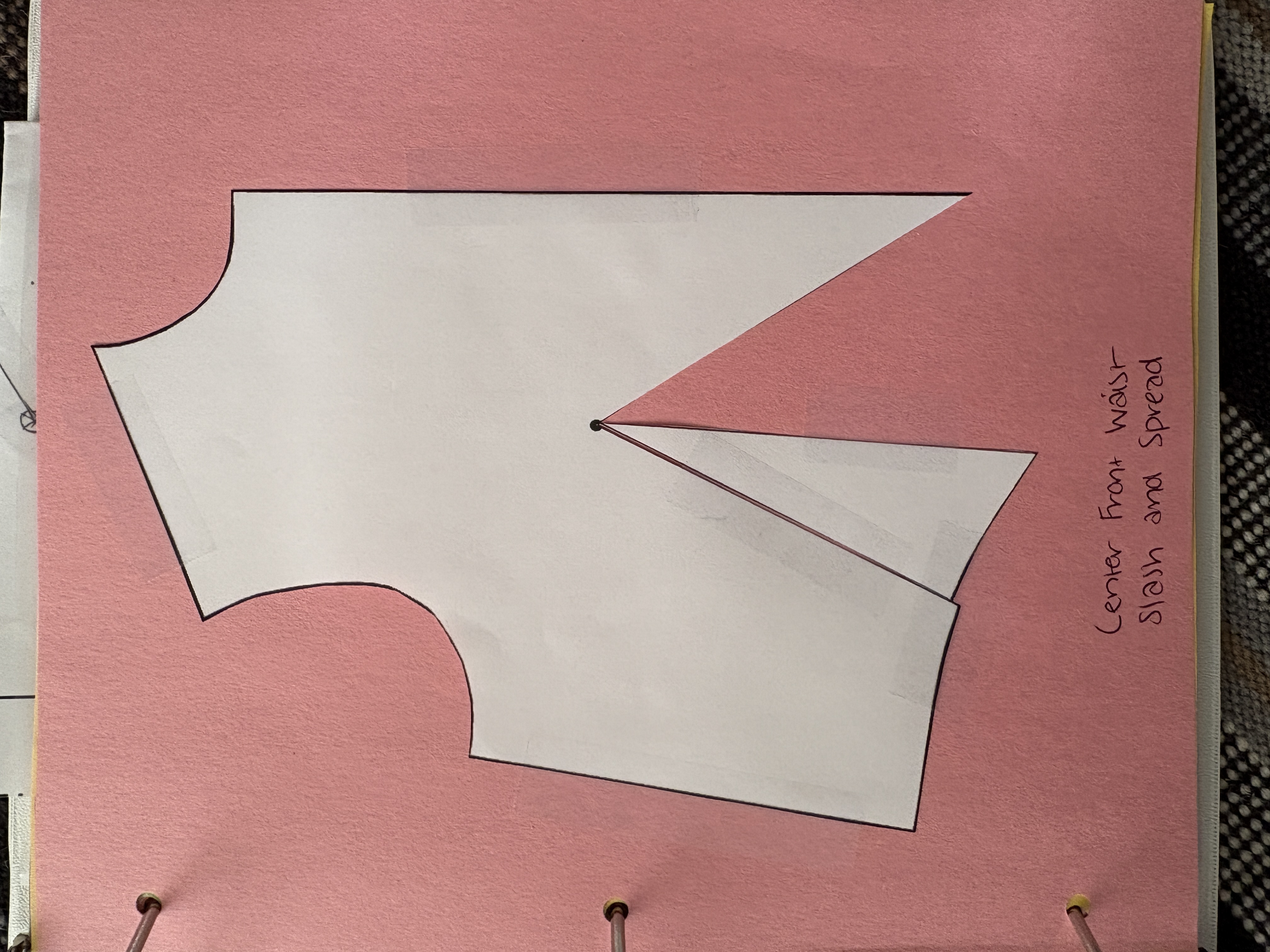
Patternmaking books and pattern drafting instructions usually introduce "slash and spread" as the standard method for moving darts and adding or redistributing fullness. The concept is pretty straightforward: cut the pattern to the pivot point, close one area, and allow the pattern to spread into a dart or fullness somewhere else. It’s intuitive, visual, and useful for when I'm trying to understand exactly where added volume is coming from and where it’s going.
The downside? There is A LOT of cutting and taping involved. Every time I want to experiment with a different dart position or amount of fullness, I have to trace the pattern, slash it, move everything into place, tape it back together, and retrace it again. It works! It’s also a great way to accumulate a pile of weirdly shaped paper scraps on my living room floor.
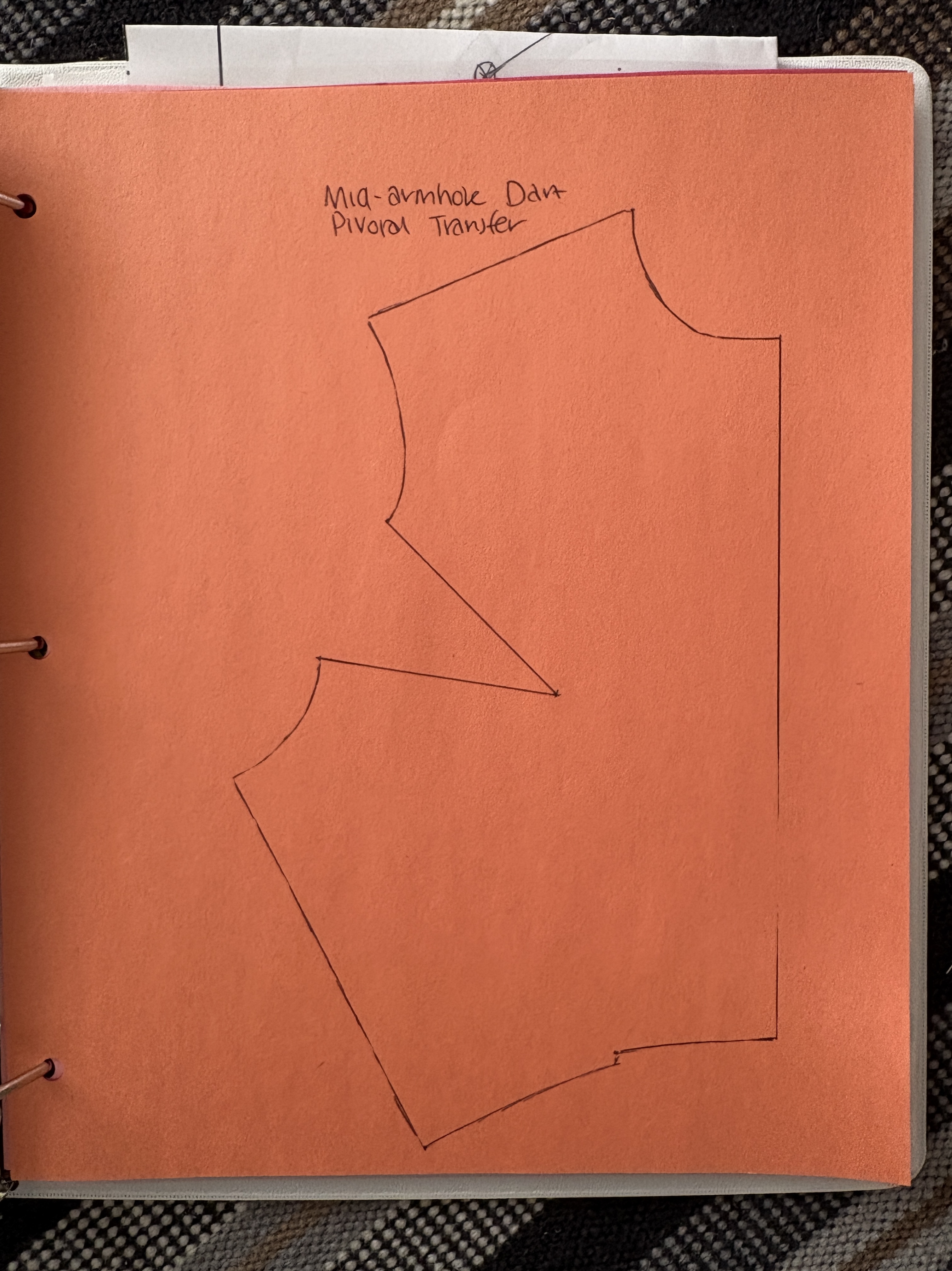
Enter the "pivotal transfer" method. Pivotal transfer manipulates darts and fullness without cutting the pattern at all. Instead, you trace part of the pattern, pivot the block around the bust apex or another pivot point to open or close the desired amount, and continue tracing the pattern in the new position. The outcome is the same as slash and spread; I’ve just generated it by moving the block instead of cutting it apart. After practicing both methods in Module 2, I can see why the slash and spread technique is usually taught first; however, the pivotal transfer technique is a great option if you want less cutting, less taping, and less paper waste. It also allows you to try out multiple ideas without sacrificing a fresh copy of your block every time. Will your scissors and tape dispenser survive the disappointment?
- M.J.