August 22, 2026
Twelve Muslins Later...
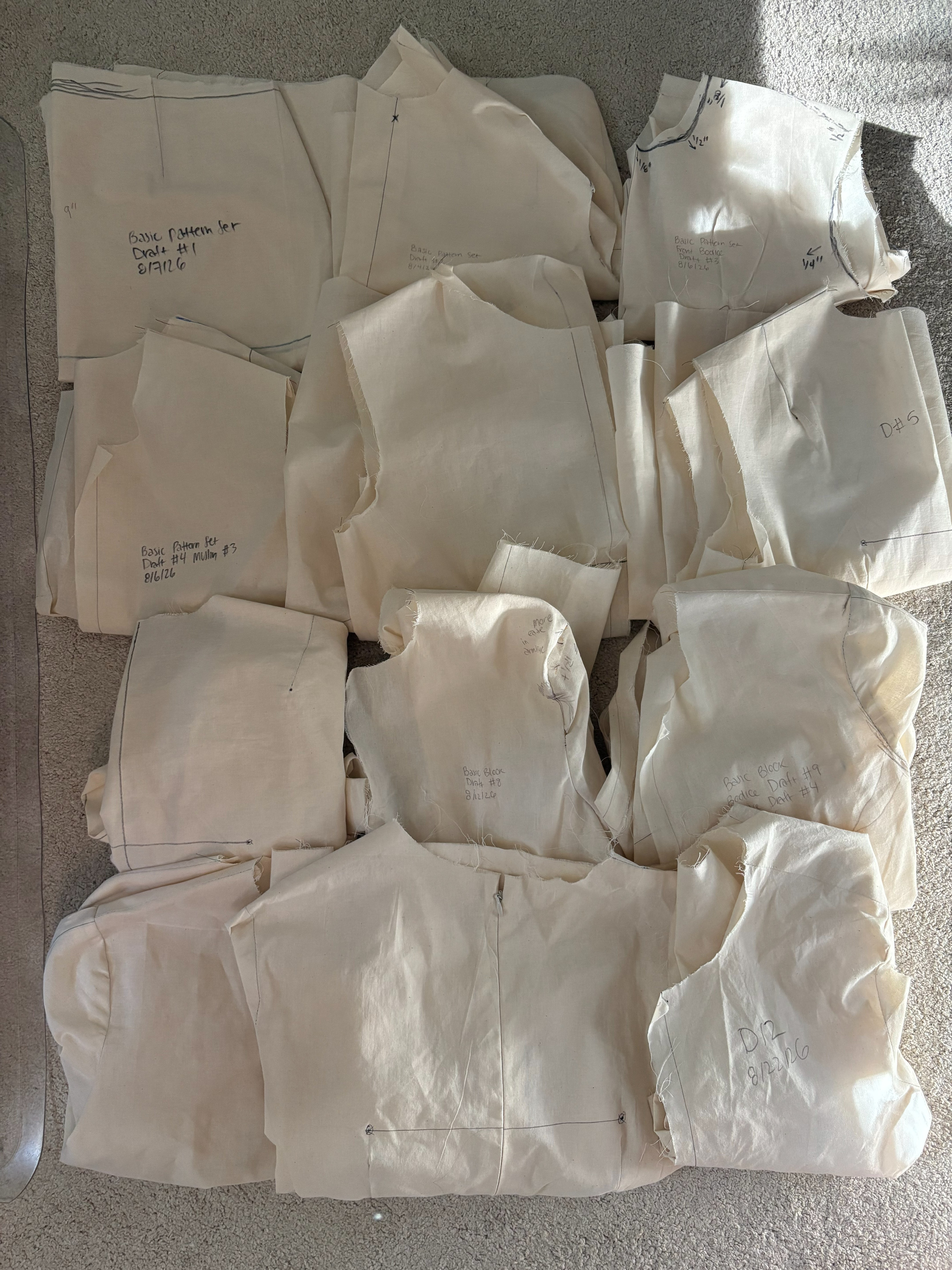
If you're currently going through the process of drafting and fitting a basic pattern set, prepare to be frustrated, especially if you're a perfectionist like me. Armstrong's block drafting instructions take a lot, and I mean A LOT, of measuring. It takes 20-something length and circumference measurements to draft the front and back bodice alone. That being said, I didn't find the actual drafting process to be that unpleasant. It was more the iterative process of drafting, sewing a muslin, assessing fit, and making adjustments over and over again that triggered every impatient bone in my body!
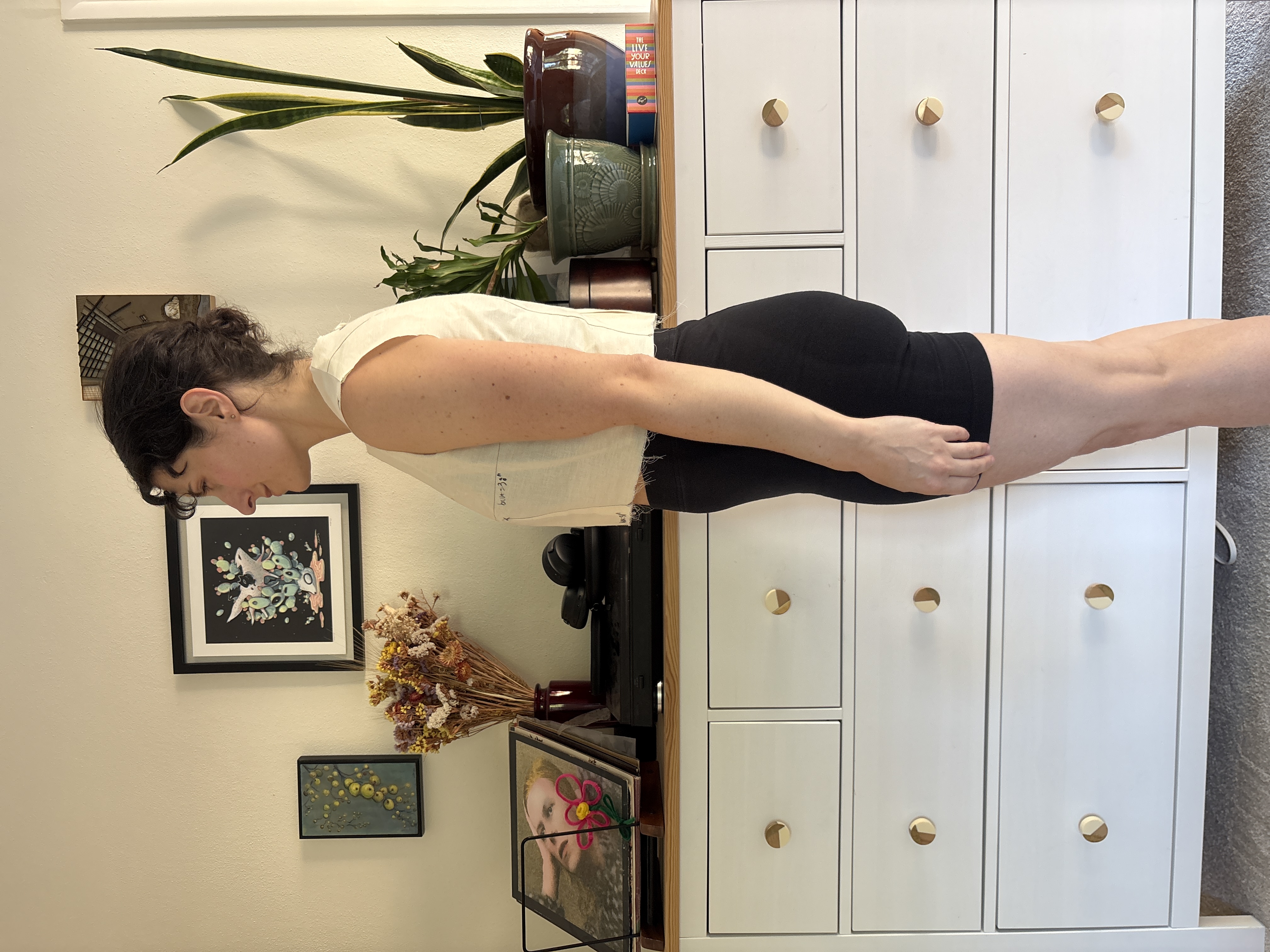
For the sleeveless bodice, I got fairly close on the first try. I mis-measured or misunderstood where the side length should start, so my armhole was overly tight. The neckhole was also somewhat misshapen and the garment had balance issues. These were fairly quick fixes, however.
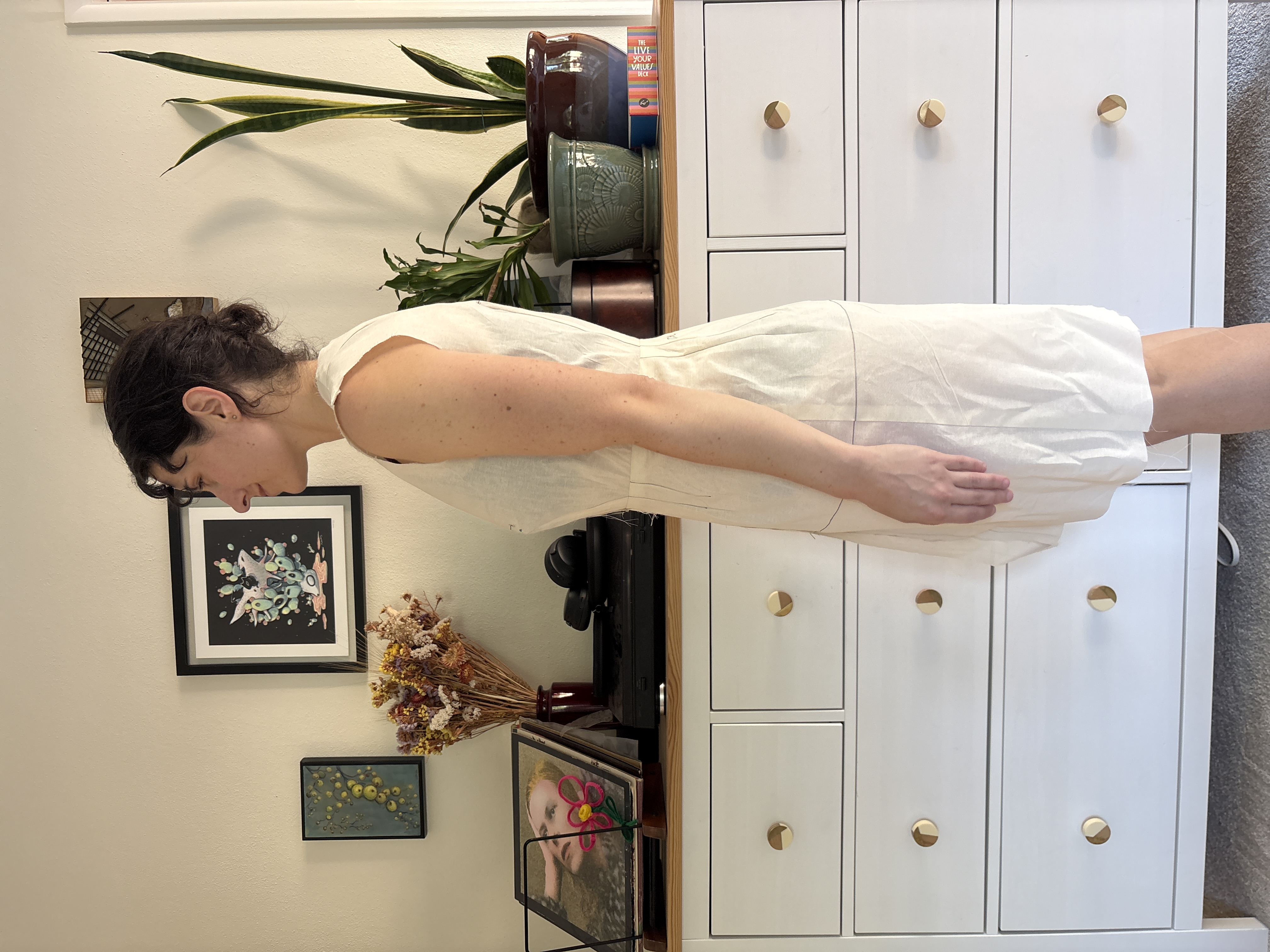
After three or four iterations of the sleeveless bodice, I moved on to adding the skirt block, which I found easiest to draft. On my first try, my side hip depth was about an inch too long, so I re-measured my front, back, and side hip depth and re-drafted accordingly. This turned out to be easy enough to do, as all three measurements were roughly the same, resulting in a tidy, square waistline. With the skirt taken care of, I moved on to the sleeved bodice.
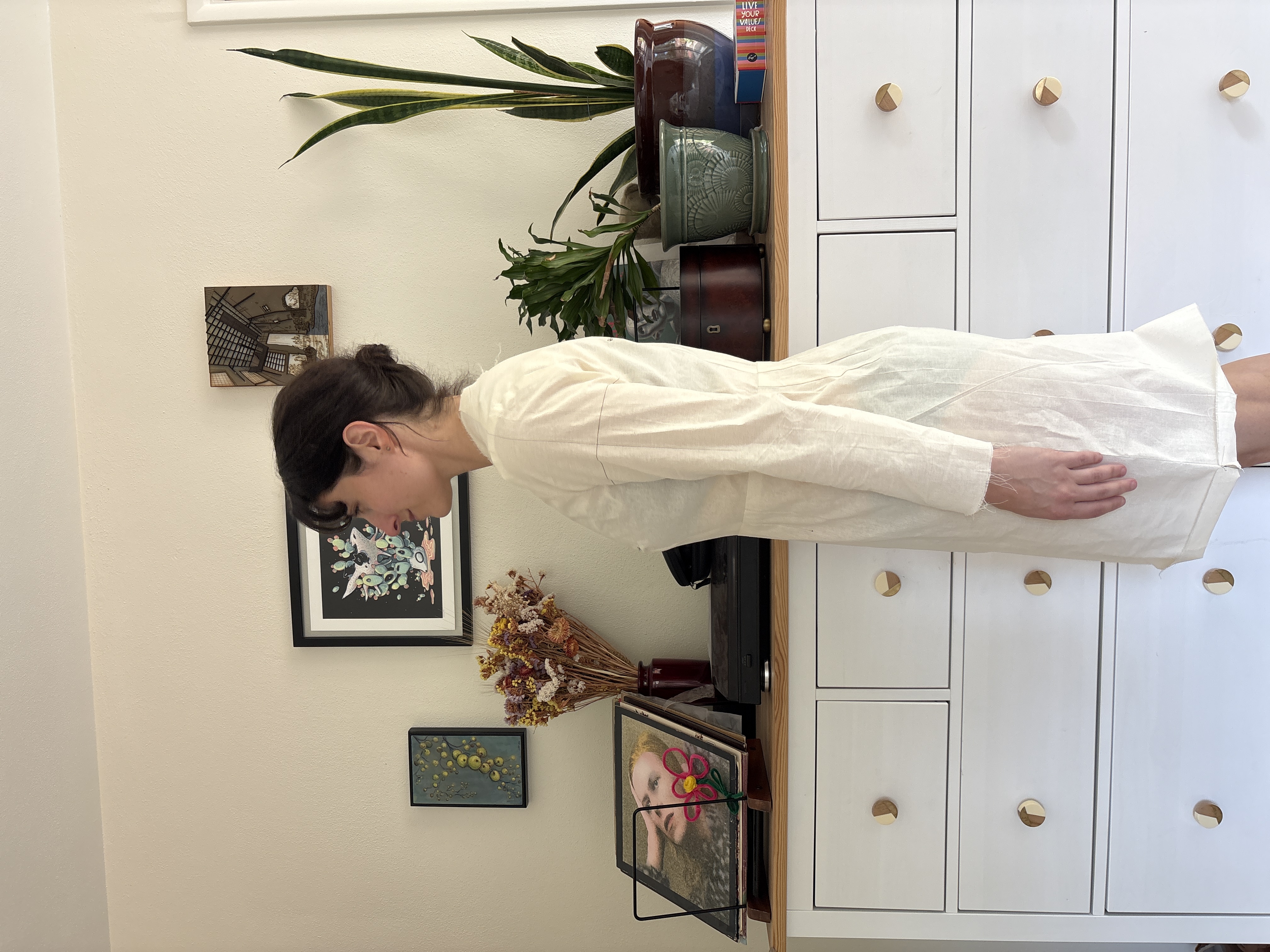
And here's where things got REALLY annoying. Drafting a sleeve is easy enough, but it's the sleeve cap/armhole relationship that makes things extremely complicated. On my first try, I followed Armstrong's recommendation that the sleeve cap ease be about 1.5" longer than the armhole. This turned out to be disasterous, and I ended up with a lovely gathered sleeve cap that cut off circulation in my armpits. After reading a tip online that said the amount of ease in the upper bust for a sleeved block should be about 2" more than the ease in a sleeveless block, I adjusted the length of the armscye accordingly. I rotated some of the waist dart into ease, and completely rotated the back shoulder dart into armscye ease. Then I added a smidge of length to the armscye at the side seam and shoulder seam. Finally, I reduced the height of the sleeve cap and widened it at the shoulder. The resultant changes resulted in a total upper bust ease of 5" and a difference of only 0.25" between the sleeve cap and armhole.
The resultant muslin was MUCH improved; however, it still took me four or five more iterations to hit a version I was satisfied with. This is mostly because I was expecting too much mobility in my fitted pattern block than it's designed for (see following journal entry). At the end of the day, who needs to lift their arms over their head anyway?
- M.J.